nime 2025 (from afar) 🦘
Unfortunately I wasn’t able to make the trek to this year’s New Interfaces for Music Expression (NIME) conference in Canberra, AU, but it was still really exciting to share ongoing work in music technology design from afar.
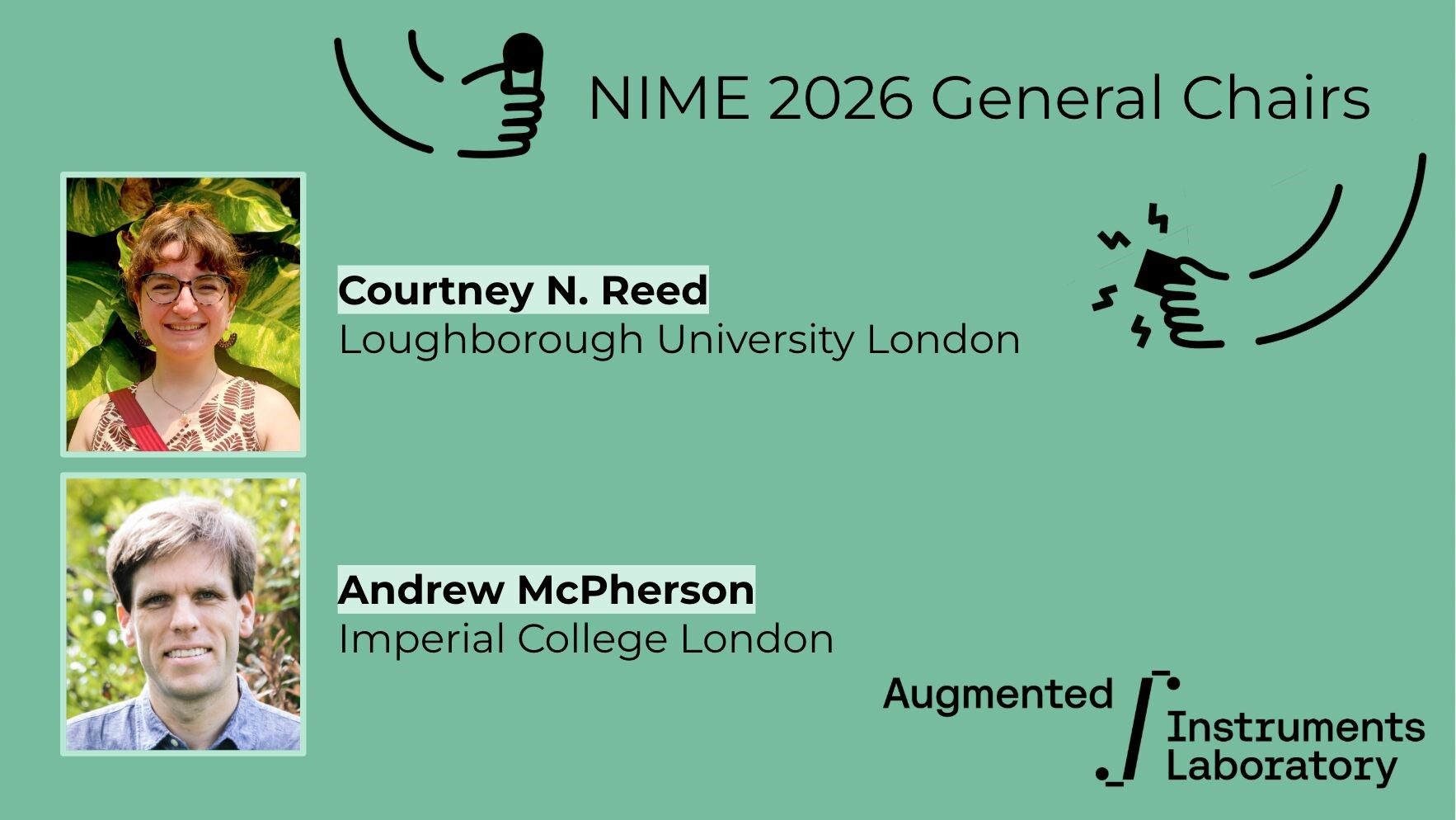
Plus, it helps to have a big piece of news - I’m co-hosting NIME 2026 in London, UK with Andrew!
(de)constructing timbre
The Augmented Instruments Lab had a whopping eleven pieces of research work in various tracks to present. My coauthor Charis Saitis presented a paper I co-authored on (de)constructing timbre and what “timbre” really means at NIME. We explored the NIME proceedings from previous years to understand better how music HCI treats this super ambigious concept and encodes aspects of timbre into digital musical instruments.✨🎶
NIME’s paper proceedings are always published open-access by the community, definitely check them out!
(De)Constructing Timbre at NIME: Reflecting on Technology and Aesthetic Entanglements in Instrument Design (Charalampos Saitis, Courtney N. Reed, Ashley Noel-Hirst, Giacomo Lepri, and Andrew McPherson)
“Timbre, pitch, and timing are often relevant in digital musical instrument (DMI) design. Amongst the three, timbre is the most difficult to define and discretise when negotiating audio representations and gesture-sound mappings. We conduct a corpus-assisted discourse analysis of “timbre” in all NIME proceedings to date (2001–2024)… While acknowledging the practical utility of technical constructions of timbre in NIME (and other digital music research communities), we contribute discussion on the entanglement of technology and aesthetics in instrument design, which constitutes what “timbre” becomes in NIME research, and reflect on the tension between technoscientific and constructivist understandings of timbre: how DMIs and musical practices have been reconstituted around particular timbral values operationalised in NIME. In response, we propose ways that the community can embrace more critical approaches and awareness to how our methods and tools shape and co-create our notions of timbre, as well as other musical concepts, connecting more openly with diverse types of sonic phenomena.”
somatic and somaesthetic design
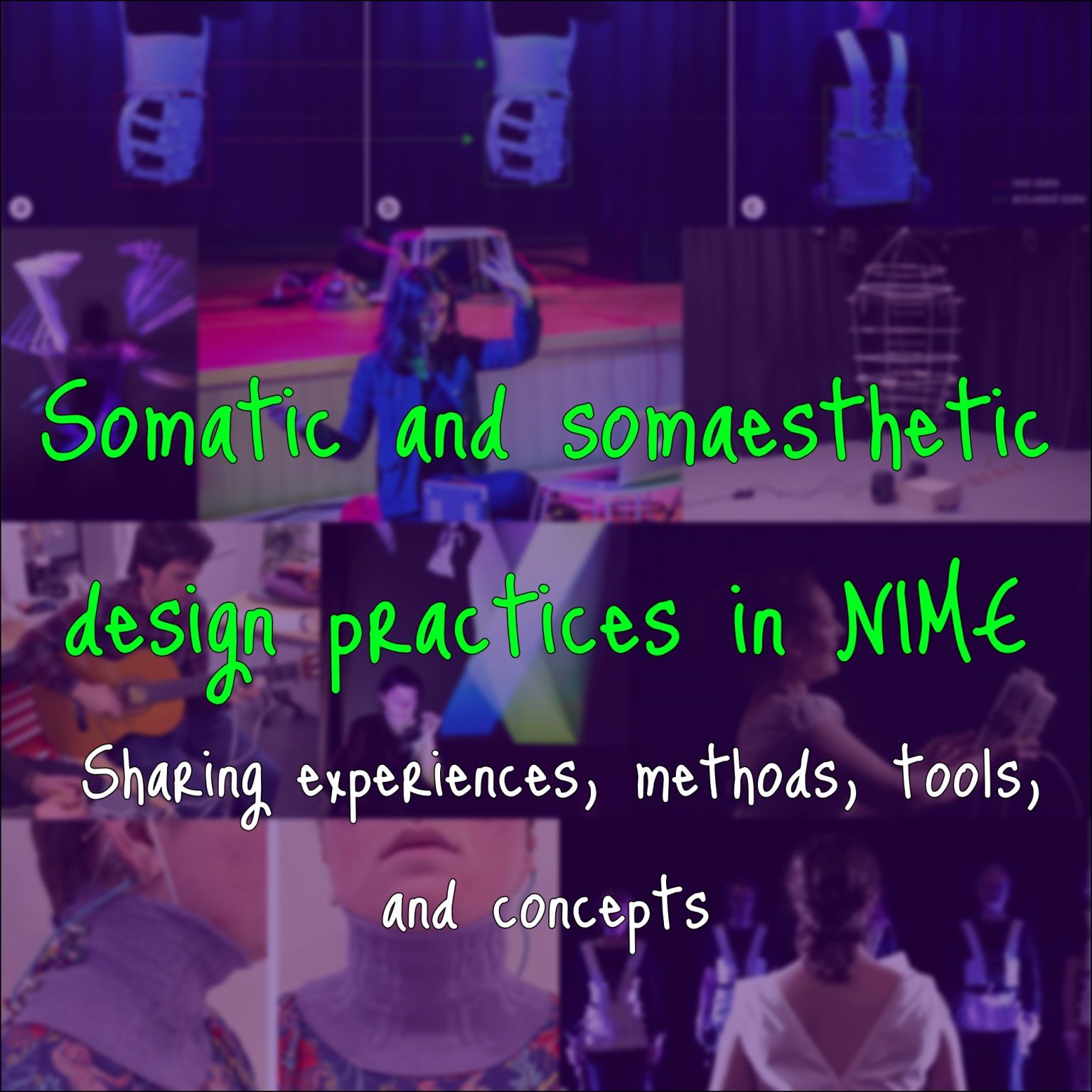
I also remotely presented at and co-organised a workshop exploring Somatic and Somaesthetic Design Practices in NIME with Juan Martinez Avila, Doga Cavdir, Mary Mainsbridge, Kelsey Cotton, Tove Grimstad Bang, and Lucia Montesinos Garcia. We had featured talks by invited speakers Lian Loke and Kia Höök as well, bringing somaesthetics further into the NIME-sphere.
The workshop was centred around these design practices and perspectives, which have increasingly become a part of the NIME community. Focusing on soma design, a methodology that centers the focus of design on the soma, i.e., the body, the lived experience, and first-person perspectives on embodied phenomena, we explored existing NIME work in this space and future aspirations for somatic NIMEs. You can view the full workshop description in the related publications below (or here!).
nime 2026!
Perhaps the most exciting thing about NIME 2025 was getting to announce at the end (via remote call-in, of course) that Andrew and I will be co-chairing NIME 2026, to happen at Loughborough London’s campus here in East London!
We’re focusing on “Community” as our theme for NIME 2026, acknowledging that NIME research is made up of an incredibly diverse group of artists, academics, practitioners, designers, and educators.
Looking forward to seeing you there!~